Show in Philadelphia: Gallery 1401

I am very excited to announce the opening of my solo show 'Redacted Topographies' at Gallery 1401 within the University of the Arts in Philadelphia.
A huge thank you to Harris Fogel for the incredible honor and for all his support and patience along the way.
This show represents yet another departure for me: not only have I finally abandoned my obsession with the purity of the image by introducing some other design elements, but I have also aged and manipulated the prints (on Kozo japanese paper). I am personally very happy with the result, but I would of course love to hear what you think!
The show will be up until February 5th, so do go visit if you are in the area:
Gallery 1401
Monday - Friday
10:00 AM - 4:00 PM
215-717.6300
Terra Hall
211 S Broad Street
Philadelphia, PA 19107
From the gallery press release:
Philadelphia – San Francisco-based photographer Nicolò Sertorio’s “Redacted Topographies” series is about our relationship with the environment around us: how we perceive it, how we live in it and how we relate to it. The more we move to urban lifestyles that are connected mostly through the web of technological means, the less we understand the world we live in and thus loose our respect toward it. Sertorio states that, “This series is a hypothetical archeology of the failed ideology of the conquest of nature; it is my belief that the idea of 'conquering’ nature has become an excuse for the indiscriminate abuse of the land. Individuality and personal freedom have turned into selfishness; there is no social accountability, no price to pay for any environmental damage. I therefore imagine a near future where humans have self-destructed and disappeared.” Beautiful landscape photographs combined with a scientific mapping system provide an alternative view of the environment.
Nicolò Sertorio is a fine art and commercial photographer based in the Bay Area in California. He earned a BA degree in International Business from the University of Dublin, Ireland, and an MBA in Economia e Commercio from the Università degli studi di Torino, Italy. Born in Princeton, his parents were both university professors, later moving to Turin, Italy, where he grew up. Later they moved to Switzerland for eight years, then finally to California, where he worked for 10 years at HP as a solution strategist for the digital imaging group before leaving to start his own photography practice. In between, he lived in Italy, Switzerland, Ireland, Belgium, India, France and Germany, and his work reflects this set of diverse aesthetic and cultural influences. He is president of the Northern California chapter of ASMP. His work has won numerous awards, including Critical Mass finalist, Prix de la Photo Paris, International Loupe Award, PDN Photo of the Day, American Photography 30, The Center for Fine Art Photography “Portfolio ShowCase 6,” Blurb “Photography Book Now,” FotoWeek DC International Awards, among others. Among the publications that have featured his work are Fraction Magazine, Lensculture, art magazin kontura (Croatia), Domus magazine, AdWeek, DoubleTakes and Time magazine.
Now in its 17th year, Gallery 1401 offers a year-round regular schedule of exhibitions of contemporary photography. Associate Professor and former director of the Photography program Harris Fogel, who founded Gallery 1401 in 1999, has been director/curator of both 1401 and Sol Mednick since 1997.

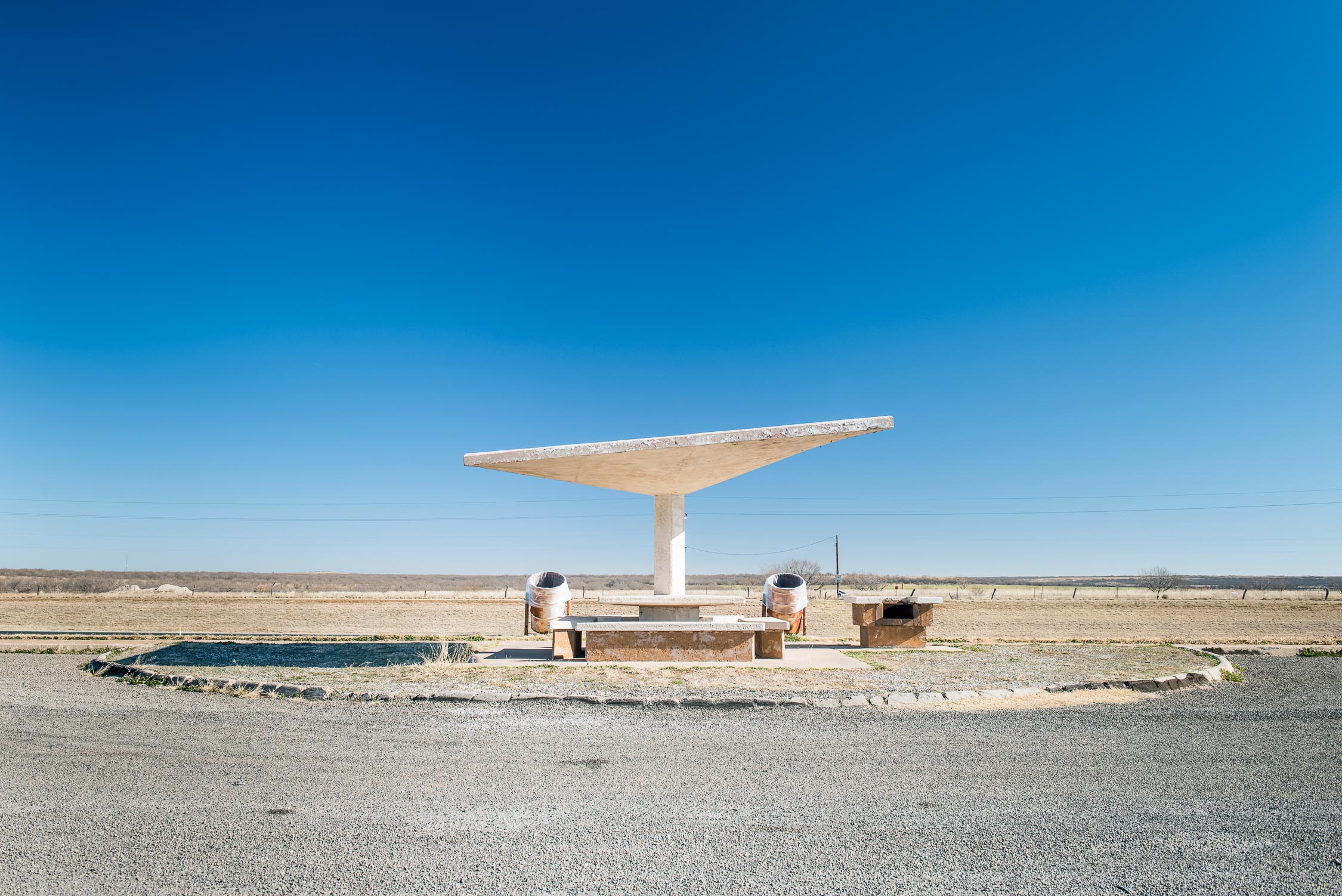
Rest Areas of the US Southwest: updated!
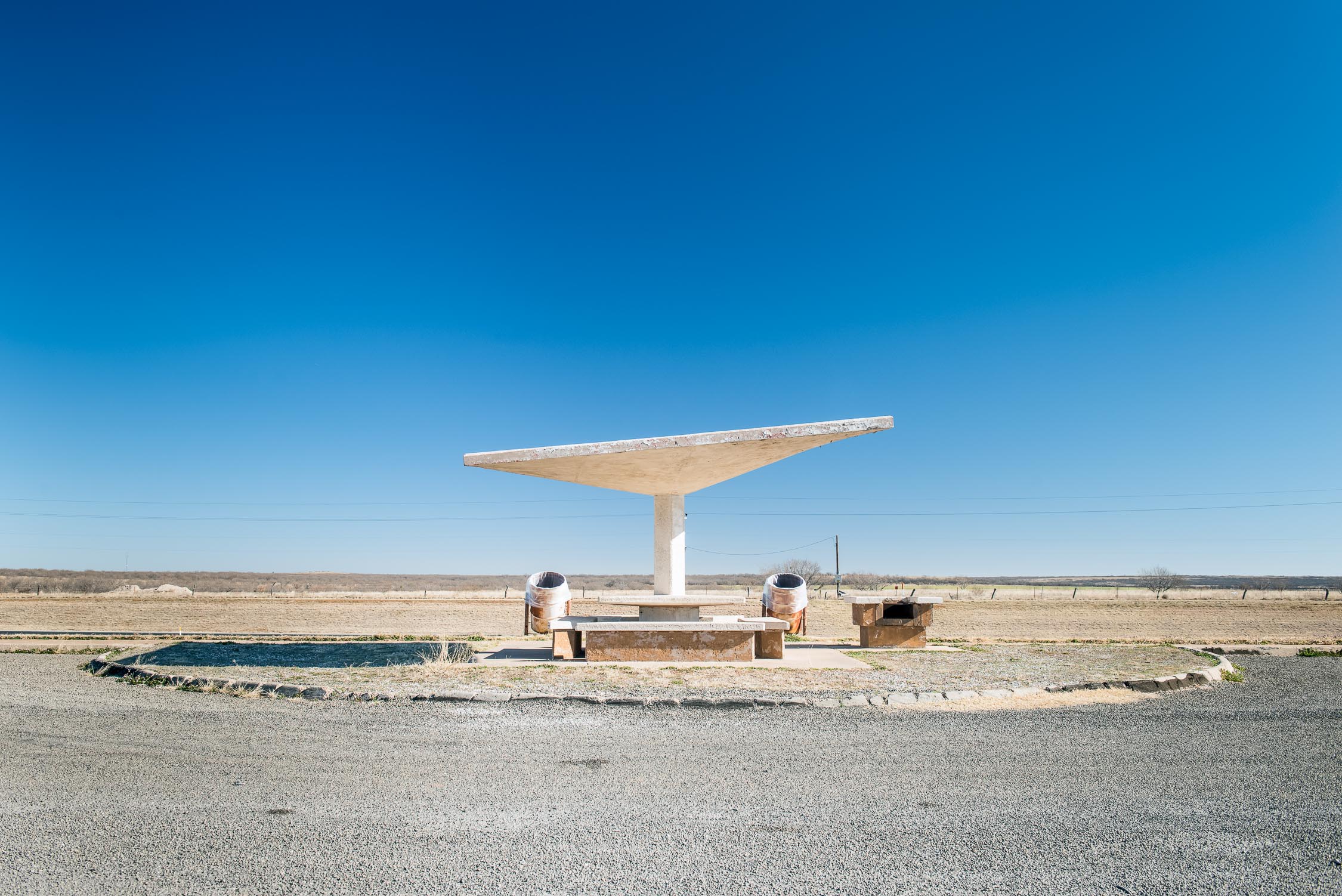
Now that I have this new cool web site I can finally create sub-menus and more complete web pages. So in celebration I updated the series 'Rest Areas of the Southwest' with many new images. Also, I finally arranged them by state!
http://nicolosertorio.com/work#/rest-areas-of-the-us-southwest-2012/
Art And Artisans: Photography, Portraiture And A New Way Of Seeing
MAR 13, 2012
Art And Artisans: Photography, Portraiture And A New Way Of Seeing
Text by SinhaRaja Tammita-Delgoda
Images by Nicolò Sertorio
The light streams in through a darkened window, lighting up a block of wood. Embedded within the wood is a shining circle of silver. A long finely pointed pin in his hand, a man is tracing patterns on the metal. He is peering closely in concentration, totally wrapped up in his work.
Putting the pin down, he takes up a light hammer and a thick, solid chisel. Relying purely on his eyes and his hands, he begins hammering out the patterns he has just traced. A light tapping sound fills the room. The noise is constant and repetitive, yet the hands do not tremble and the fingers remain steady. As the hammer rings out, the patterns take shape before our eyes.
Beside the man, lies an open wooden toolbox. It is a glimpse into his craft and his life. Spilling out is a collection of saws, chisels, nails and razors. In the softness of the morning light the lines stand out sharply, an amalgam of different shapes and forms. Some of the tools have cutting edges, others are long and pointed; some have blunted points and flattened ends, one or two are shaped like keys. It is a way of working and a way of life which has not changed for centuries, a culture which is still alive today.

E. N. Wimalasooriya is one in a long line of hereditary craftsmen. For generations his family have been the metal workers, silversmiths and jewelers of Sinhalē, the last independent kingdom of Sri Lanka. Known to outsiders as the Kande Uda Rata, “the Land above the Mountains,” to its own people it was Sinhalē, the last bastion of more than 2,000 years of culture and tradition. A hidden, guarded realm, surrounded by rugged mountains and steamy tropical jungles, it lay at the very heart of Sri Lanka. For nearly three centuries, the people of Sinhalē held the Portuguese, the Dutch and the British at bay. In 1815 the ancient kingdom was betrayed to the British by its own nobility. Today this whole region is known as Kandy, British shorthand for Kande Uda Rata. Wimalasooriya is a quiet, gentle man, soft spoken and unassuming. He is a master craftsman, yet he is humble to a fault. Shy and hesitant before the camera, he mumbles “There is nothing special about me, there are so many others.” His life has always been his work and he has been working since he was seventeen. He is now in his sixties but his teacher, he tells us, is still alive and working. Wimalasooriya’s workshop adjoins his home, which lies next door. Everything he needs is within arm’s length or walking distance. He does not have to go out and sell, people come to him. He is very much his own man. He cannot be hurried, he works at his own pace and names his price. He is so trusted that quantities of gold, silver and precious stones are left with him for months on end. With quiet pride he tells us that no one has ever been able to point out any mistakes that he has made.
Wimalasooriya’s only child is his daughter. Although not yet twenty one, Ashani is a school teacher. Her world is one of books, children and classrooms. Yet she has inherited his ability to draw, capturing curving, complex patterns with easy skill. As her father gets older it is she who does the sketches. “Yes”, Ashani admits with a shy smile, like him, now she can draw almost any pattern. One day perhaps, it will be she who carries on the traditions.

Photographer Nicolò Sertorio, an Italian and an American had never been to Sri Lanka before. Although he had spent several months in India, for him Sri Lanka was a very different experience. The picture of this part of the world, he observed, had come mostly from photojournalists and tourists. The photojournalists often saw only struggle, conflict, poverty, war and disaster. Tourists however, often saw the beauty but what they really focussed on were the differences. Things often seemed so strange and so foreign that this was all they saw. People were not connecting with the person anymore.
Nicolò recalls one of his first impressions of India. “Hundreds and hundreds of rickshaws massed together.” His first thought was survival. “How can we get home safely? How can people live like this? How can they make sense of it? How can I make sense of this?” It took several months before he could accept what he saw as a part of a way of living. “As I started to talk to people, I began to see beyond the superficial. Only then did I begin to see the rhythms and the stories, to understand them as a different way of life.” Only then did he become aware of how much time and how much desire it took to go beyond the superficial. “It also took opportunity.”
Guided by his friend, Sri Lankan artist and designer, Nisansala Karunaratne, Nicolò set out to explore the art and traditions of Kandy. Struck by the differences between the worlds, he wanted to portray the craftsman in a new light. The question he asked himself was how could he convey it visually. “In America we watch television every day but we don’t really see.” There is a form of indoctrination in the filtering of any image. America is such an overwhelmingly visual society, so full of television, film and vivid color that the eye has become habituated and desensitized. “In a way we have to see again, to distance ourselves from habituation and preconception.”
Nicolò began to think about using portraiture as a way of seeing. Portraiture in the western style was usually very high end. It was very visual and technically very well executed.
“It is well lit and well done, so that we focus only on the person, not the environment. What I wanted to do was to take out the environment. To remove the element of judgment, to create a visual image which would connect eye to eye.”
****
Not far away from the silversmith’s home, hidden away in a maze of leafy overgrown lanes, was another village of craftsman. This area was home to the weavers of Sri Lanka’s famous Dumbara mats. They too had once been royal craftsmen. Before 1815 they had made wall hangings and mats at the direction of the king to decorate his kingdom. The material which they use is hemp.

Once the leaves and stalks have been gathered together, they are scraped against a log with a wooden tool. The scraping removes the fleshy part of the leaf, leaving a yellow green fibre. The fibre is then oiled and brushed and spun into a thick, fluffy thread, like cotton. This thread is then woven on a small simple loom which is placed on the floor.
This is one of the most traditional of crafts. It is a long and painstaking process. Sitting on the floor, the weaver’s concentration is intense as he picks out the lines with a very fine needle. Long years of poring over his work have meant that he too has to wear spectacles. Inch by inch the mat takes shape and the design starts to appear. It can take anything between three to ten days to make just one mat.
Like the silversmith, Dharmadasa also works at home. His features are sharp and his face alert. He too seems to be well into his sixties. Starting just after he left school, he had learned his craft from his father. In the tradition of most Kandyan craftsmen, his family were also farmers and like his father before him, Dharmadasa still farms his lands. His mats have won him national recognition and today he works with some of Sri Lanka’s finest designers. Now he has begun teaching his son, so that he can pass the custom on.
The weaving of cloth was once widespread throughout the provinces of the Kandyan kingdom. Today it is only practiced in the remote hamlet of Talagune, hidden away amidst the mountains and valleys of the Kandyan countryside. Narrow winding roads climb up and down the side of rocky peaks, passing through forests, gushing streams and gleaming paddy fields; even today Talagune seems lost in time.
This is the one and only village which has been weaving since royal times. Whole pieces of cloth are woven on large wooden looms. They are worked by pedals, whose movement throws the shuttle across the loom. This too is a farming society. Unlike the craftsmen of medieval Europe, the artisans of Kandy did not live in towns, they had no shops and did not work for hire. Sirisena and his family still work the paddy fields which lie nearby.

His grandfather had taught Sirisena to weave. He has been weaving since he was sixteen. Both his sons, Chandana and Saman, had learned from him. One of them, Saman, had lost his leg in Sri Lanka’s long, unending war against the Tamil Tigers. During wartime, there had been little work and they had all had to do other things. Saman had joined the army and gone off to the war. Although he could no longer use the looms, he works on the smaller pieces, such as wall hangings and table mats. Since the end of the war in 2009, things have changed. “Now there are lots of people coming.”
As the pedals are worked, the clanking begins and the bars begin to move. Glistening, brilliant threads are thrown to and fro across the wooden beams, creating dazzling geometric forms. The pace of work is leisurely, everyone stops to chat and there are peals of laughter. In the background is the sound of the radio.

The colors may vary but the designs remain traditional. The old is used to cater for the new. However, to weave just one piece could take as much as five and a half days. “It all depends,” says Sirisena. Many of the designs are still unique. Up till now, he says no one has been able to do them on a machine. Nisansala asked about the design which Nicolò had commissioned. “When could he have it?” Sirisena smiled. “I’ll give it to you when it’s ready.”
SinhaRaja Tammita-Delgoda
Writer, historian and art historian, SinhaRaja Tammita-Delgoda is an authority on the art and culture of Sri Lanka. He is the author of several books and numerous articles on India and Sri Lanka.